
Publication Policy
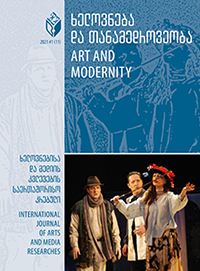
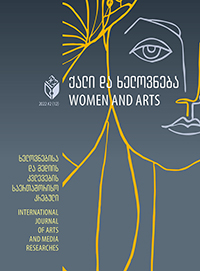
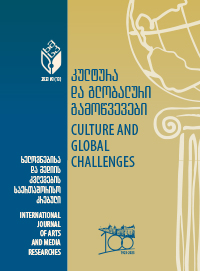
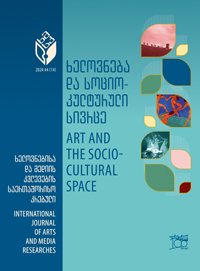
Article 1. Purpose of the Policy
1.1. This Publication Policy establishes the editorial, peer review, publication, and ethical standards of the International Journal of Arts and Media Researches.
1.2. The Policy defines the fundamental principles governing the Journal’s publishing activities and sets out the rights and responsibilities of authors, the Editor-in-Chief, Subject Editors, reviewers, and the Editorial Board.
1.3. This Policy is binding upon all individuals participating in the Journal’s editorial and publication process.
Article 2. Mission, Objectives and Core Principles of the Journal
2.1. The mission of the International Journal of Arts and Media Researches is to promote excellence in arts scholarship—including theatre studies, film studies, art history and theory, musicology, choreology, and media studies related to culture—by fostering international academic collaboration, advancing high standards of scholarly publishing, and supporting the free dissemination of scientific knowledge.
2.2. The Journal serves as an international platform for the further development, peer review, and publication of research presented at the International Conference of Art Researchers. It aims to facilitate the transformation of conference papers into high-quality scholarly articles and to publish original research that meets international academic standards in the fields of arts and media studies.
2.3. Papers presented at the Conference are considered for publication as scholarly articles following scientific evaluation, peer review, editorial revision, and final approval.
2.4. The Journal is guided by the following principles:
academic integrity;
scholarly independence;
objectivity;
transparency;
impartial evaluation;
respect for authors’ rights;
support for Open Science;
international academic cooperation; and
free access to scholarly research.
Article 3. Editorial Policy
3.1. The Journal is published as a series of thematic issues. Each issue bears an individual title reflecting its specific conceptual focus.
3.2. The theme of each issue is determined by the Editorial Board, taking into account the thematic scope of the International Conference of Art Researchers and current developments in arts scholarship.
3.3. Only manuscripts that correspond to the thematic concept of a particular issue and satisfy the Journal’s scholarly and editorial standards are considered for publication.
3.4. The Journal is published officially in both Georgian and English. All scholarly articles are published in full in both languages.
3.5. Georgian authors are required to submit their manuscripts in both Georgian and English. International authors submit their manuscripts in English, while the Georgian translation is prepared by the Editorial Office.
3.6. The Editorial Office is responsible for ensuring the consistency and equivalence of the Georgian and English versions of each published article.
3.7. The Journal publishes only original scholarly works that have not been previously published and are not under consideration by another publication.
3.8. Authors bear full responsibility for the content of their manuscripts, the accuracy of the research results, and the reliability of all cited sources.
Article 4. Editorial Review, Evaluation and Publication Process
Each manuscript submitted to the Journal undergoes a multi-stage editorial, scholarly evaluation, and publication process designed to ensure academic quality, editorial integrity, and compliance with the Journal’s publication standards.
4.1. Submission and Initial Screening
4.1.1. All manuscripts are submitted to the Editor-in-Chief, who conducts an initial assessment to determine whether the submission falls within the scope of the Journal and complies with its formal submission requirements.
4.1.2. Each submitted manuscript is assigned a unique identification number to ensure proper administration and confidentiality throughout the editorial process.
4.2. Plagiarism Screening
4.2.1. All submitted manuscripts are screened using specialised plagiarism detection software.
4.2.2. The plagiarism report is reviewed by the Editor-in-Chief and, where appropriate, forwarded to the relevant Subject Editor for academic assessment. The Subject Editor evaluates the nature and academic justification of any identified similarities.
4.2.3. Where a violation of academic integrity is identified, the manuscript shall be withdrawn from the editorial process.
4.2.4. The detailed procedures governing plagiarism screening are set out in the Regulations on the Prevention and Detection of Plagiarism and the Use of Artificial Intelligence (AI), which form an integral part of this Publication Policy.
4.3. Scholarly Evaluation
4.3.1. Members of the Editorial Board, who also serve as Subject Editors in their respective academic disciplines, participate in the scholarly evaluation of submitted manuscripts within their fields of expertise.
4.3.2. Each manuscript is assigned by the Editor-in-Chief to the Subject Editor whose academic expertise corresponds to the subject of the submitted research.
4.3.3. The Subject Editor is responsible for the scholarly evaluation and subject-specific editorial review of the assigned manuscript. The Subject Editor shall:
– evaluate the scholarly quality of the manuscript;
– determine its relevance to the Journal’s scope and the thematic concept of the respective issue;
– review the plagiarism report, where applicable;
– prepare a written evaluation using the Journal’s standard evaluation form;
– conduct subject-specific academic editing within the scope of their expertise, including the assessment of the research design, logical consistency, terminology, and the relevance and reliability of the cited sources;
– where necessary, collaborate with the author in improving the manuscript and preparing it for publication.
4.3.4. The Journal is committed to the progressive development of an independent pool of anonymous reviewers. Anonymous peer review is conducted subject to the availability of qualified specialists in the relevant academic discipline and the organisational capacity of the Journal to administer the review process.
4.4. Anonymous Peer Review
4.4.1. Prior to peer review, the Editor-in-Chief removes all information that may reveal the identity of the author and prepares an anonymised version of the manuscript.
4.4.2. The anonymised manuscript is forwarded to an independent Anonymous Reviewer, selected from among specialists in the relevant academic discipline.
4.4.3. Anonymous Reviewers are not informed of the identity of the author.
4.4.4. Authors are not informed of the identity of the Anonymous Reviewer.
4.4.5. The identity of Anonymous Reviewers is known only to the Editor-in-Chief, who is responsible for maintaining the confidentiality, integrity, and impartiality of the peer review process.
4.4.6. Where the evaluations provided by the Subject Editor and the Anonymous Reviewer differ substantially, the Editor-in-Chief may appoint a third independent Anonymous Reviewer.
4.5. Editorial Decision
4.5.1. The final decision to accept, request revision of, or reject a manuscript is made by the Editor-in-Chief, taking into consideration:
the evaluation of the Subject Editor;
the recommendations of the Anonymous Reviewer(s);
the plagiarism screening report;
the requirements of the Journal’s Publication Ethics Policy;
the Conflict of Interest Policy; and
the principles of academic integrity set forth in this Publication Policy.
4.6. Editorial Preparation
4.6.1. Following acceptance for publication, each manuscript undergoes the following editorial production process under the coordination of the Editor-in-Chief:
- a) technical and language editing of the Georgian text;
- b) full translation into Georgian of manuscripts submitted by international authors, where applicable;
- c) academic and linguistic editing of the English text;
- d) preparation of the manuscript in accordance with the Journal’s design and visual identity;
- e) typesetting and page layout;
- f) final editorial review and approval for publication.
4.7. Publication
4.7.1. Each issue of the Journal and every published article is assigned a Digital Object Identifier (DOI).
4.7.2. The Journal is published in both print and electronic formats.
Article 5. Artificial Intelligence and Plagiarism Prevention Policy
5.1. The Journal recognises the use of Artificial Intelligence (AI) as a supportive tool in scholarly research and academic writing. However, AI systems shall not be credited as authors or co-authors of any manuscript.
5.2. Authors are required to disclose the use of Artificial Intelligence in those cases specified in the Journal’s Regulations on the Prevention of Plagiarism and the Use of Artificial Intelligence (AI).
5.3. The detailed rules governing plagiarism prevention and the use of Artificial Intelligence are set out in the above-mentioned Regulations, referred to in Article 4.2.4, which constitute an integral part of this Publication Policy.
Article 6. Publication Ethics
The Journal is committed to the principles of academic integrity, fairness, transparency, impartiality, confidentiality, and professional responsibility. All participants involved in the editorial and publication process are expected to comply with the ethical standards set forth in this Policy.
6.1. Responsibilities of Authors
Authors shall:
a) submit original scholarly work in accordance with the Journal’s submission requirements;
b) acknowledge all sources accurately and comply with accepted standards of academic citation;
c) refrain from submitting the same manuscript simultaneously to another scholarly journal or publisher;
d) comply with the principles of academic integrity and copyright law;
e) disclose the use of Artificial Intelligence where required under the Journal’s AI Regulations;
f) disclose any actual or potential conflict of interest.
6.2. Responsibilities of the Editor-in-Chief
The Editor-in-Chief shall:
a) ensure compliance with the Journal’s Publication Policy;
b) administer the editorial evaluation and peer review process in a fair, objective, and impartial manner;
c) ensure the confidentiality of the anonymous peer review process and the anonymisation of submitted manuscripts;
d) safeguard the professional independence of authors, Subject Editors, and Anonymous Reviewers;
e) make final editorial decisions solely on the basis of scholarly merit, the recommendations of the Subject Editor, and the evaluations of the Anonymous Reviewer(s);
f) avoid any actual or potential conflict of interest.
6.3. Responsibilities of Subject Editors
6.3.1. Subject Editors shall:
a) conduct an objective and professionally sound scholarly evaluation of the manuscripts assigned to them within the scope of their academic expertise;
b) assess the manuscript’s relevance to the Journal’s scope and the thematic focus of the respective issue;
c) review the plagiarism screening report and, where necessary, evaluate the academic significance of any identified similarities;
d) undertake subject-specific academic editing, paying particular attention to the research methodology, terminological accuracy, coherence of argumentation, and the appropriateness and reliability of cited sources;
e) where appropriate, collaborate with the author to improve the scholarly quality of the manuscript and prepare it for publication;
f) maintain confidentiality and avoid any actual or potential conflict of interest.
6.4. Responsibilities of Anonymous Reviewers
6.4.1. Anonymous Reviewers shall:
a) maintain strict confidentiality and refrain from disclosing any information obtained during the review process;
b) provide an objective, well-reasoned, and academically substantiated evaluation;
c) identify the strengths and weaknesses of the manuscript and, where appropriate, recommend relevant scholarly literature;
d) immediately notify the Editor-in-Chief of any actual or potential conflict of interest and decline or discontinue the review process;
e) refrain from using any confidential information obtained through peer review for personal or professional advantage.
Article 7. Copyright and Licensing Policy
7.1. Copyright of all published articles remains with the author(s).
7.2. By publishing an article in the Journal, the author grants the Journal the non-exclusive right of first publication in both print and electronic formats.
7.3. All materials published in the Journal are licensed under the Creative Commons Attribution 4.0 International (CC BY 4.0) license.
7.4. Visual Materials
7.4.1. Authors are responsible for ensuring the lawful use of all visual materials included in their manuscripts and, where required, for obtaining the necessary permissions for their reproduction and publication.
7.4.2. Authors shall comply with the requirements concerning visual materials set out in the Journal’s Author Guidelines.
Article 8. Conflict of Interest Policy
8.1. A conflict of interest shall mean any financial, personal, professional, institutional, or other circumstance that may compromise the objectivity or impartiality of an author, the Editor-in-Chief, a Subject Editor, or an Anonymous Reviewer.
8.2. Authors, the Editor-in-Chief, Subject Editors, and Anonymous Reviewers shall promptly disclose any actual or potential conflict of interest to the Editor-in-Chief and shall refrain from any action or decision that could compromise the fairness or integrity of the editorial and publication process.
8.3. In relation to authors, the Editor-in-Chief, and Subject Editors, a conflict of interest may include, but is not limited to:
financial interest or financial dependency;
personal or close family relationships;
administrative or institutional subordination;
ongoing legal, professional, or ethical disputes;
any other circumstance that may affect professional objectivity or impartiality.
8.4. Academic supervision, scholarly collaboration, or employment within the same academic or research institution shall not, in themselves, constitute a conflict of interest for the Editor-in-Chief or a Subject Editor, unless additional circumstances exist that may compromise their impartiality.
8.5. Anonymous Reviewers shall decline or discontinue the review process if, during the evaluation of a manuscript, they believe that the identity of the author has become apparent or that any circumstance exists which may constitute a conflict of interest. In such cases, the Reviewer shall immediately notify the Editor-in-Chief.
8.6. Decisions concerning conflicts of interest shall be made by the Editor-in-Chief. Where the conflict of interest involves the Editor-in-Chief, the matter shall be considered and decided by the Editorial Board.
Article 9. Corrections and Retraction Policy
9.1. Where, following publication, a significant error, plagiarism, or a breach of academic or publication ethics is identified, the Editorial Board may decide to:
a) publish a correction (Correction or Erratum);
b) publish an author’s statement or clarification;
c) retract the published article (Retraction).
Article 10. Open Access and Publication Fee Policy
10.1. The Journal is an Open Access scholarly publication.
10.2. All published articles are freely accessible to readers without subscription or access restrictions.
10.3. No fees are charged to authors for manuscript submission, peer review, translation, editorial processing, or publication.
Article 11. Archiving Policy
11.1. Electronic versions of the Journal are maintained on the official website of Shota Rustaveli Theatre and Film Georgia State University.
11.2. Printed issues are preserved in the University Library and deposited with the relevant libraries in accordance with the legislation of Georgia.
11.3. The Editorial Office is responsible for ensuring the continued availability and preservation of published issues through the University’s electronic resources.
11.4. The Journal is committed to the gradual integration of internationally recognised digital archiving and preservation systems.
Article 12. Final Provisions
12.1. This Publication Policy establishes the fundamental principles governing the Journal’s publication, editorial, peer review, ethical, and Open Access practices.
12.2. The draft Publication Policy shall be reviewed by the Editorial Board, which may make recommendations prior to its adoption.
12.3. This Publication Policy, together with any subsequent amendments or revisions, shall be reviewed and approved by the Editorial Board.
12.4. The Editorial Board may initiate the revision or amendment of this Publication Policy in response to developments in international publishing standards, publication ethics, or the strategic development of the Journal.
12.5. Amendments to this Publication Policy shall enter into force upon their approval by the Editorial Board.
Reviewed and Approved
by the Editorial Board
12.08.2026